Why this belongs here
The World Cup is one of the few events that can make the world feel synchronized.
For about a month every four years the same games are happening in living rooms, bars, offices, stadiums, group chats, text threads, and distracted browser tabs across the world. People who do not usually follow the same teams suddenly care about the same score. A group-stage result in one city changes the mood somewhere else. A goal in stoppage time can rearrange an entire bracket before most people have finished explaining what was at stake.
That is part of why I bothered to build my own tracker.
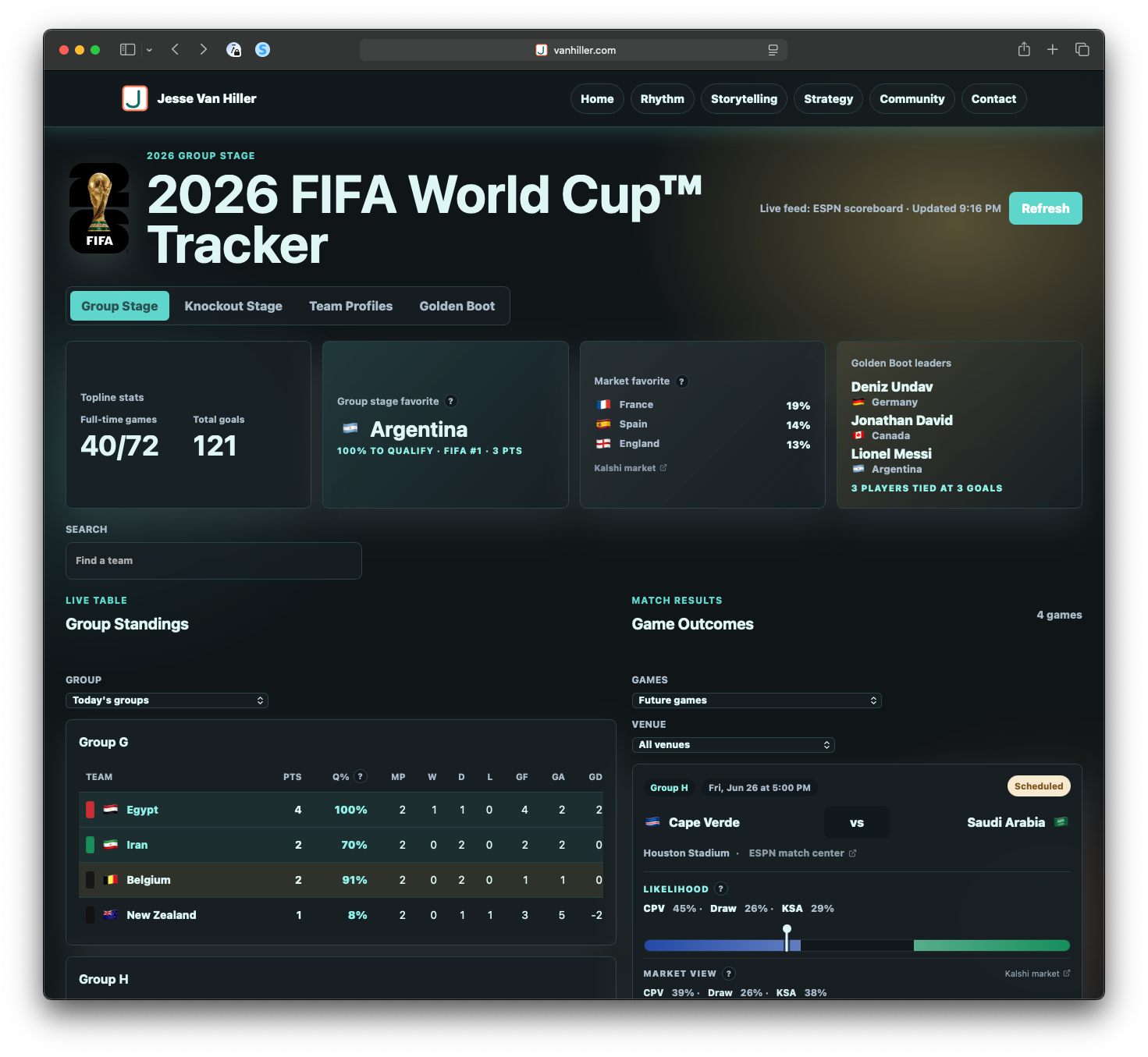
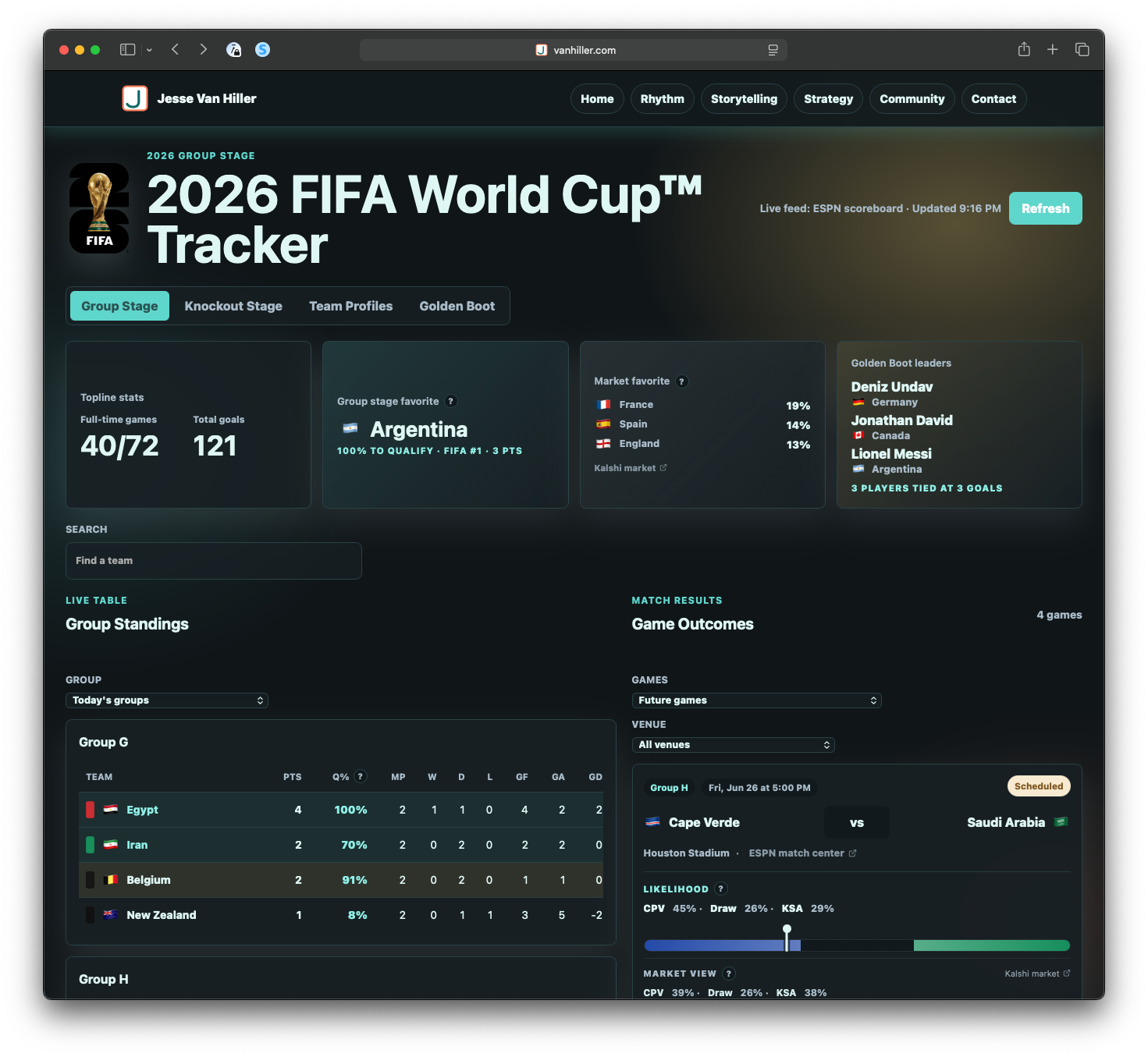
It was not because the tournament lacks coverage. The World Cup is covered everywhere. Scores, schedules, highlights, standings, predictions, brackets, and commentary are all easy to find. But easy to find is not the same as easy to follow. I kept wanting a simpler way to understand the tournament as it was moving: who was leading, who was still alive, which third-place teams were in position, where the knockout paths were forming, and what each result was quietly changing.
The tracker began as a practical fan tool, but it also became a small act of participation. Building it was a way of joining the tournament rather than only watching it. Sharing it was a way of making that participation available to other people.
Community is not only formal membership or organized service. It is also the temporary structure that forms when people gather around a shared rhythm. Music does this. Neighborhood events do this. Fundraisers do this. Sports do this. The World Cup does it at a global scale, creating a common language for people who may not otherwise share one.
A tracker is a modest contribution to that shared space. It does not create the tournament, and it does not create the community around it. But it can make the experience easier to enter. It can reduce the mental math. It can help someone understand why a match matters, why a draw changes everything, or why a third-place team is suddenly worth watching.
In that sense, the app is not just a product artifact. It is a small piece of connective tissue. It turns a sprawling global event into something a little more legible, a little more shareable, and a little easier to follow together.